 +86 14775511065
  contact@mglled.com
In the rapidly evolving world of visual technology, the LED display has transitioned from a luxury item to a ubiquitous tool for communication. Whether it’s the massive billboard in Times Square or the high-definition LED screen in a corporate boardroom, the underlying technology determines not just how good the images look, but also how much they cost to run.
If you’ve been scouting the market for a high-performance LED screen lately, you’ve likely encountered the terms ‘Common Cathode’ and ‘Common Anode’. While they sound like jargon pulled straight from a physics textbook, these two architectures are the ‘secret sauce’ behind the modern energy saving LED display. Understanding the difference is crucial for anyone looking to balance performance with operational efficiency.
What Exactly are Common Cathode and Common Anode?
At its core, an LED display is composed of millions of tiny light-emitting diodes grouped into pixels. Each pixel typically contains three sub-pixels: Red, Green, and Blue (RGB). The terms ‘Common Cathode’ and ‘Common Anode’ refer to how these internal LED chips are electrically connected within the module.
1. Common Cathode (CC)
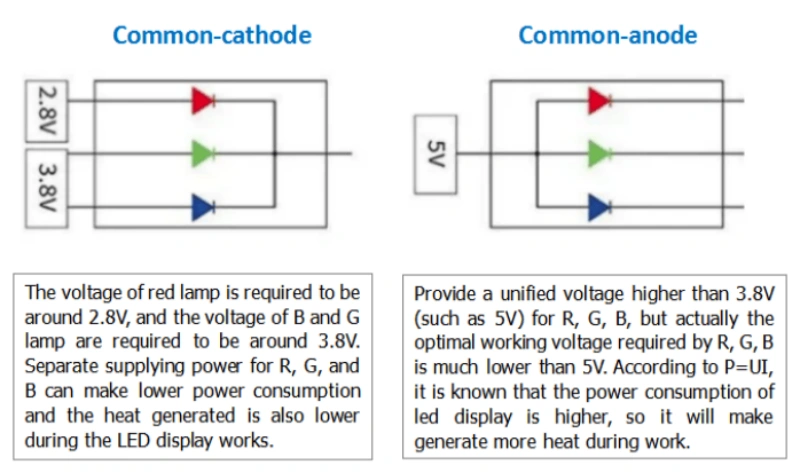
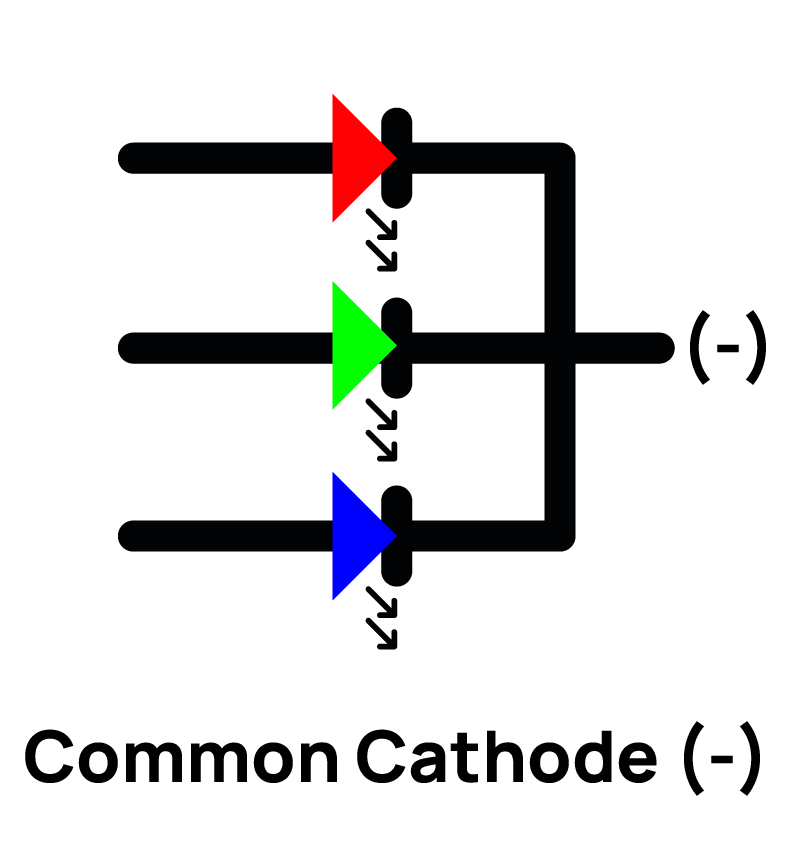
In a Common Cathode arrangement, the negative terminals (cathodes) of the Red, Green, and Blue LED chips are tied together at a single point. This shared point is connected to the ground of the circuit. Meanwhile, the positive terminals (anodes) of each color are driven individually.
• Driving Method: To light up a specific color, the driver IC sends a positive voltage to the individual anode.
• The Energy Saving Connection: Because the negative ends are shared, the system can technically provide different voltages to the positive ends of the R, G, and B chips. This is the foundational logic of the energy saving LED display.
2. Common Anode (CA)
Common Anode is the ‘traditional’ way of building an LED display. Here, the positive terminals (anodes) of the RGB chips are connected to a common power supply line. The negative terminals (cathodes) are then controlled individually by the driver IC to complete the circuit.
• Driving Method: The system provides a constant high voltage to the common anode, and the driver IC ‘pulls’ the specific cathode to a low level (ground) to trigger light.
• The Standard Approach: This design has been the industry standard for decades because of its simplicity and the wide availability of compatible driver components.

The Technical Showdown: Key Differences
While both methods get the job done, the way they handle electricity and heat is worlds apart. Let’s break down the technical nuances that separate a standard LED screen from a high-efficiency energy saving LED display.
1. The Physics of Supply Voltage
The most significant difference lies in how voltage is distributed. LED chips are made of different semiconductor materials, meaning they have different ‘forward voltage’ requirements to emit light:
• Red LEDs typically require about 2.8V.
• Green and Blue LEDs typically require about 3.8V.
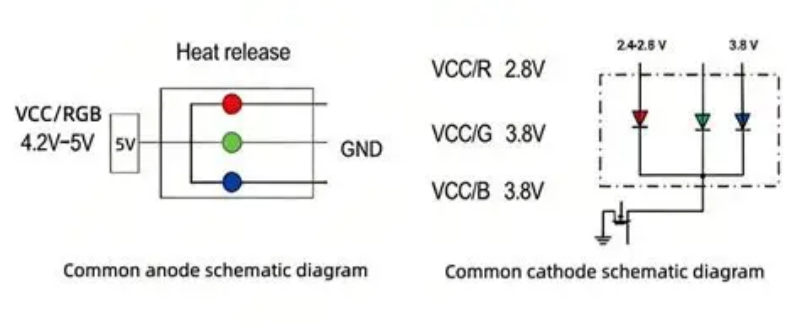
In a Common Anode setup, because all chips share the same positive power line, the power supply must provide a single, unified voltage- usually 5V – to ensure the Green and Blue chips have enough power. This means the Red LED, which only needs 2.8V, is forced to take 5V. The ‘extra’ 2.2V doesn’t make the light brighter, it is simply wasted.
In a Common Cathode setup, the system can use dual-voltage power supplies. It sends 2.8V to the Red chip and 3.8V to the Green and Blue chips. By matching the supply to the physical needs of the LED, the energy waste is virtually eliminated.
2. Heat Dissipation and Cooling
Heat is the natural enemy of any electronic device, and the LED display is no exception. In the Common Anode example above, that wasted 2.2V of electricity doesn’t just disappear—it turns into heat.
The energy saving LED display (using Common Cathode technology) runs significantly cooler. Because there is no excess voltage being burned off as heat, the working temperature of a CC screen is typically 15°C to 20°C lower than a CA screen. This ‘cool running’ nature reduces the need for heavy-duty air conditioning in outdoor installations, further slashing your energy bills.
3. Color Accuracy and Stability
High temperatures cause LED chips to ‘shift’ in color over time. By maintaining a lower operating temperature, Common Cathode technology ensures that the white balance remains stable and the colors stay vivid for a longer period. This makes it the preferred choice for high-end indoor fine pitch LED displays where visual perfection is non-negotiable.

Why Choose an Energy Saving LED Display?
If you are looking at the long-term ROI (Return on Investment), the energy saving LED display is almost always the smarter play. Here is why the industry is shifting toward Common Cathode:
1. Lower Power Consumption
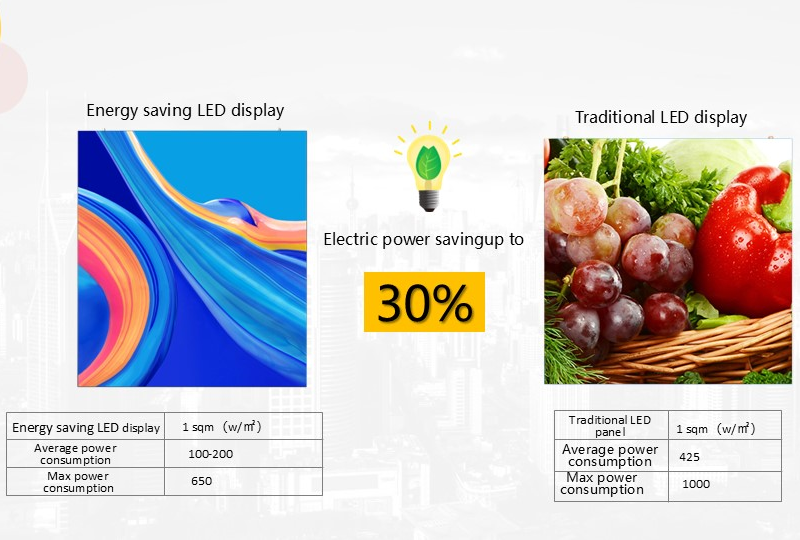
A Common Cathode LED display can reduce power consumption by 25% to 50% compared to traditional designs. For a large-scale outdoor billboard running 18 hours a day, this translates into thousands of dollars in electricity savings annually.
2. Extended Lifespan
Heat accelerates the aging of LED beads and driver ICs. By keeping the system cool, you effectively double the reliable lifespan of the LED screen. You’ll see fewer ‘dead pixels’ and less ‘ghosting’ (the trailing effect often seen on older screens).

3. Improved Contrast and Refresh Rates
Because the driver ICs in Common Cathode systems don’t have to deal with massive heat loads, they can perform more efficiently. This results in higher refresh rates (often 3840Hz or higher) and smoother grayscale transitions, which is vital for modern video content.

4. Higher Brightness and Better Image Quality
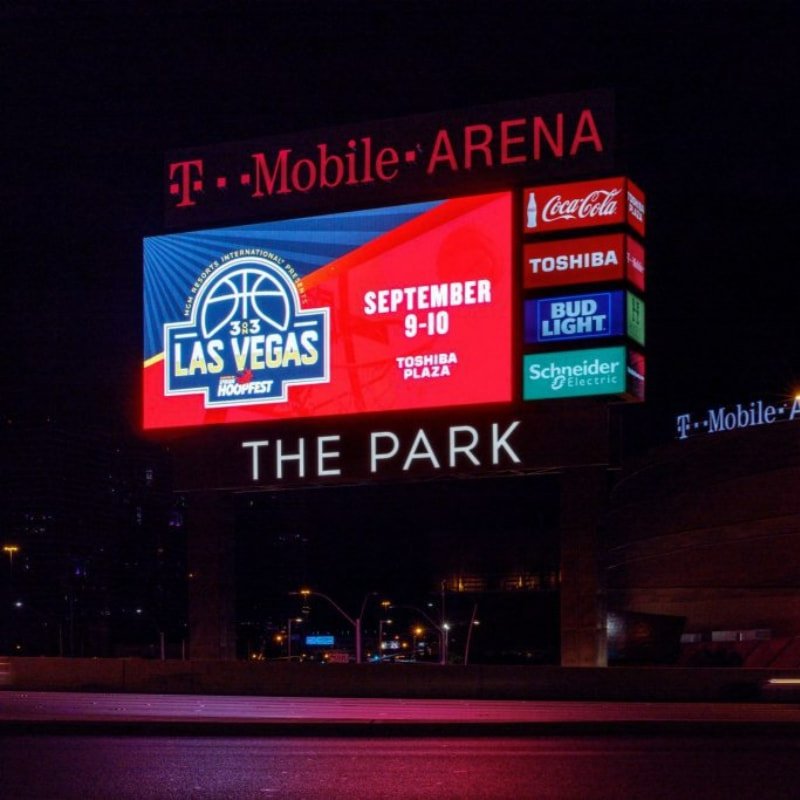
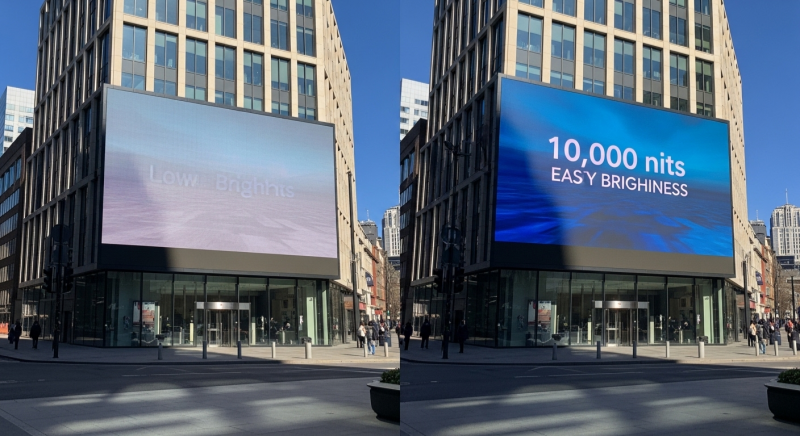
A Common Cathode LED display provides superior, stable white balance and consistent high brightness, which is crucial for combating direct sunlight (typically 7,000–10,000+ nits).
Advantages and Disadvantages at a Glance
Market Demand and Application Scenarios
1.Where Common Anode Wins
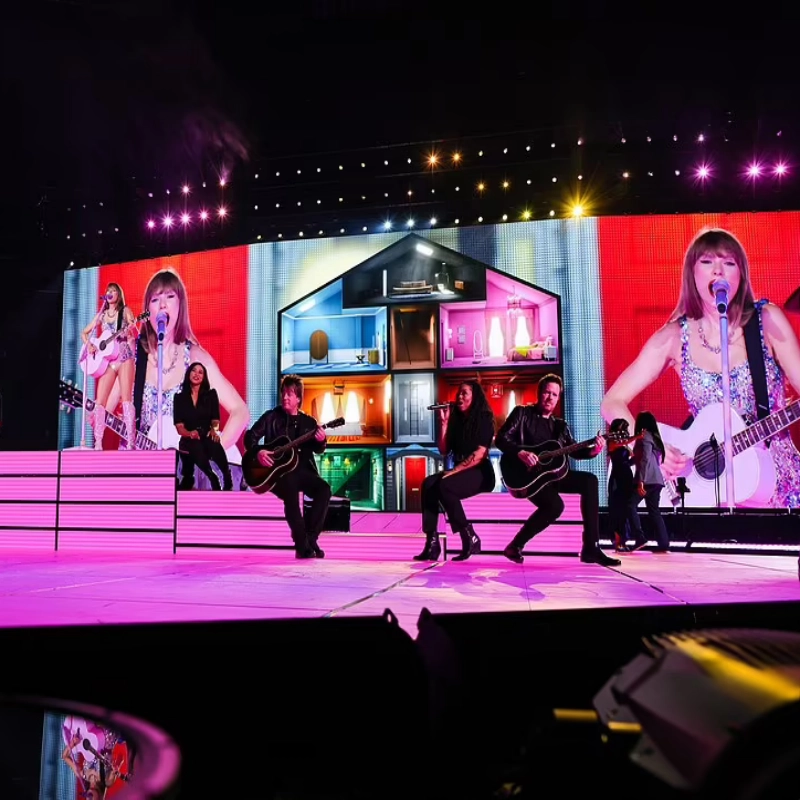
The Common Anode LED display still holds a significant market share, particularly in the budget-friendly segment. For small LED signs, retail posters, or temporary event led screens where the display isn’t running 24/7, the lower upfront cost often outweighs the long-term energy savings. It’s a ‘mature’ technology, meaning parts are easy to find and technicians are universally trained on it.
2.Where Common Cathode (Energy Saving) Wins
The energy saving LED display is the king of the high-end market.
• Outdoor Advertising: Massive LED screens that face the sun all day need every bit of cooling and energy efficiency they can get.
• Fine Pitch LED Screens: In high-density LED screens, the heat generated by millions of pixels in a small space can be dangerous. CC technology keeps these screens safe and functional.
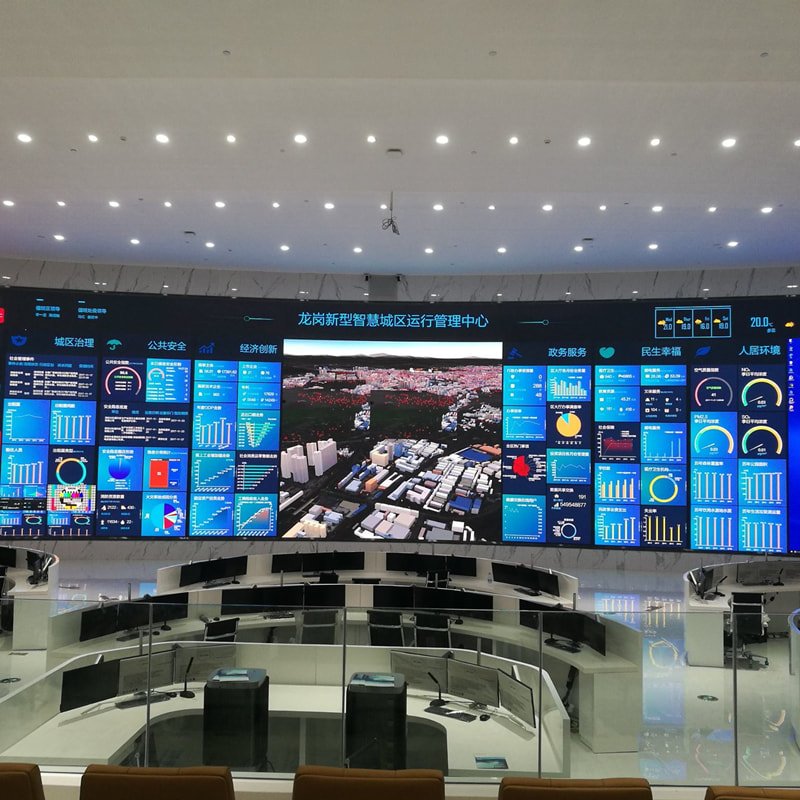
• Command Centers: Where reliability and 24/7 operation are required, the lower failure rate of CC displays makes them the industry gold standard.
Final Thoughts: Making the Right Investment
Choosing between a Common Anode and a Common Cathode LED display isn’t just a technical decision; it’s a financial one. While a Common Anode LED screen might save you money on day one, an energy saving LED display will pay for itself through reduced electricity bills and lower maintenance costs over its lifetime.
In an era where ‘green’ technology is no longer optional, opting for a high-efficiency LED display is a win-win for your wallet and the environment. Correctly matching your LED display architecture to your project’s specific needs will ensure that your message shines bright without burning a hole in your budget.
Megalight LED will always provide customers the most suitable solutions based on requirement and situation on site, no matter energy saving LED display or cost efficient LED display. Choosing Megalight LED means choosing a reliable partner.