 +86 14775511065
  contact@mglled.com
Customers often ask, “Which pixel pitch LED display is best for my project?” Answering this requires balancing three factors: viewing distance, content type, and budget.
Pixel pitch determines the base model selection
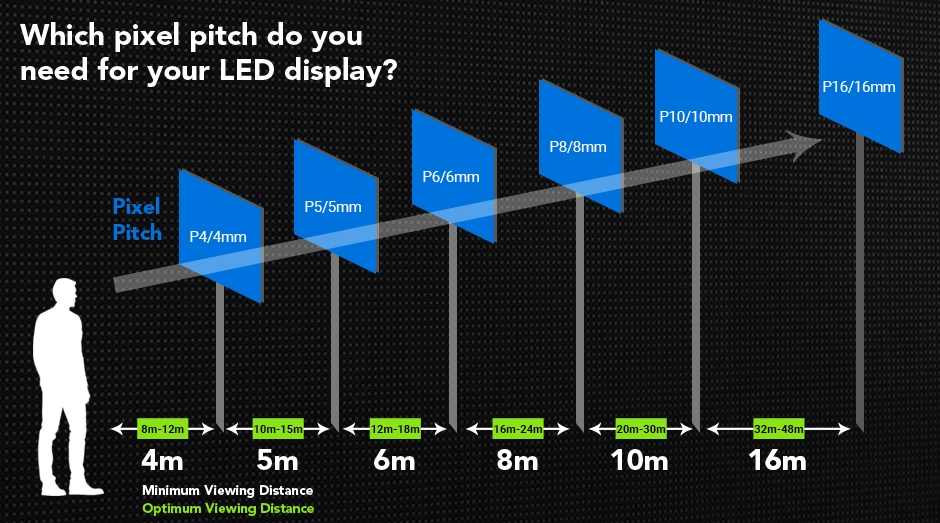
Pixel pitch is the key to minimum viewing distance and clarity, it is the measurement, typically in millimeters (mm), of the distance from the center of one pixel (a cluster of red, green, and blue LEDs) to the center of an adjacent pixel on an LED display. A smaller pixel pitch means pixels are packed more densely, leading to higher resolution and sharper images, especially at closer viewing distances. Conversely, a larger pixel pitch creates more space between pixels, which is suitable for LED displays viewed from farther away but can appear grainy up close.
Pixel pitch is key to minimum viewing distance and clarity. The industry rule of thumb is:
Minimum viewing distance (m) ≈ P value (mm) × 1000.
For example, a P2 LED screen delivers a coherent, clear image when viewed from 2 meters away.
Actual selection requires additional trade-offs: Will it display high-definition promotional videos or dense data/text? Will it be used in dimly lit command centers or bright outdoor environments? The ultimate goal is to find the optimal balance between visual impact and cost.
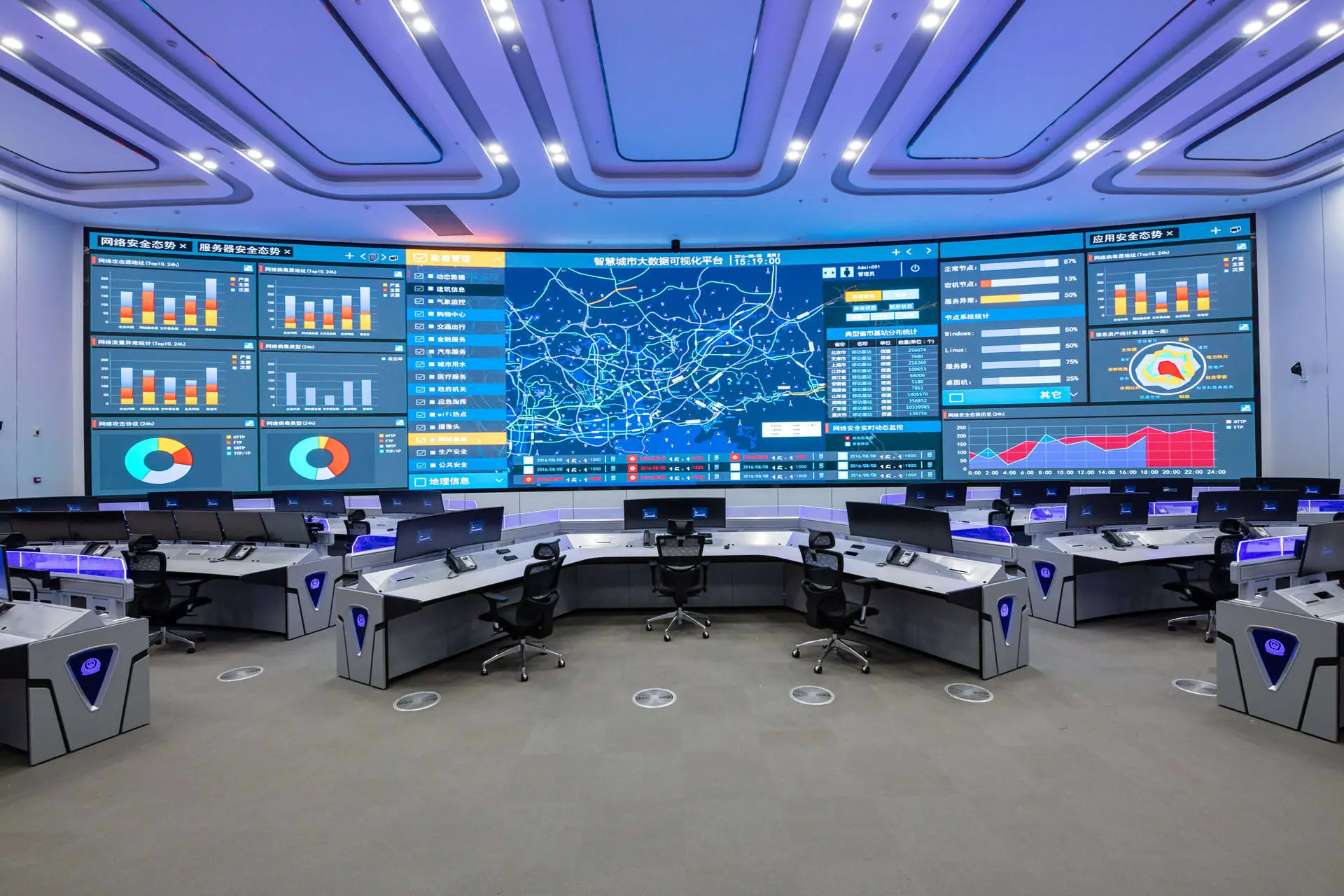
Recommended Pixel Pitch: P0.6 ~ P1.5
With viewing distances of just 1-3 meters, operators must stare intently at LED screens for extended periods, demanding exceptional detail clarity. High information density requires seamless display of GIS maps, real-time data streams, etc., where pixelation must be eliminated to ensure interpretation efficiency. P0.9-P1.5 offers mainstream cost-effectiveness; top-tier projects option for P0.6 to achieve ultimate detail rendering. In this scenario, large COB LED displays are the preferred choice due to their high contrast and reliability.
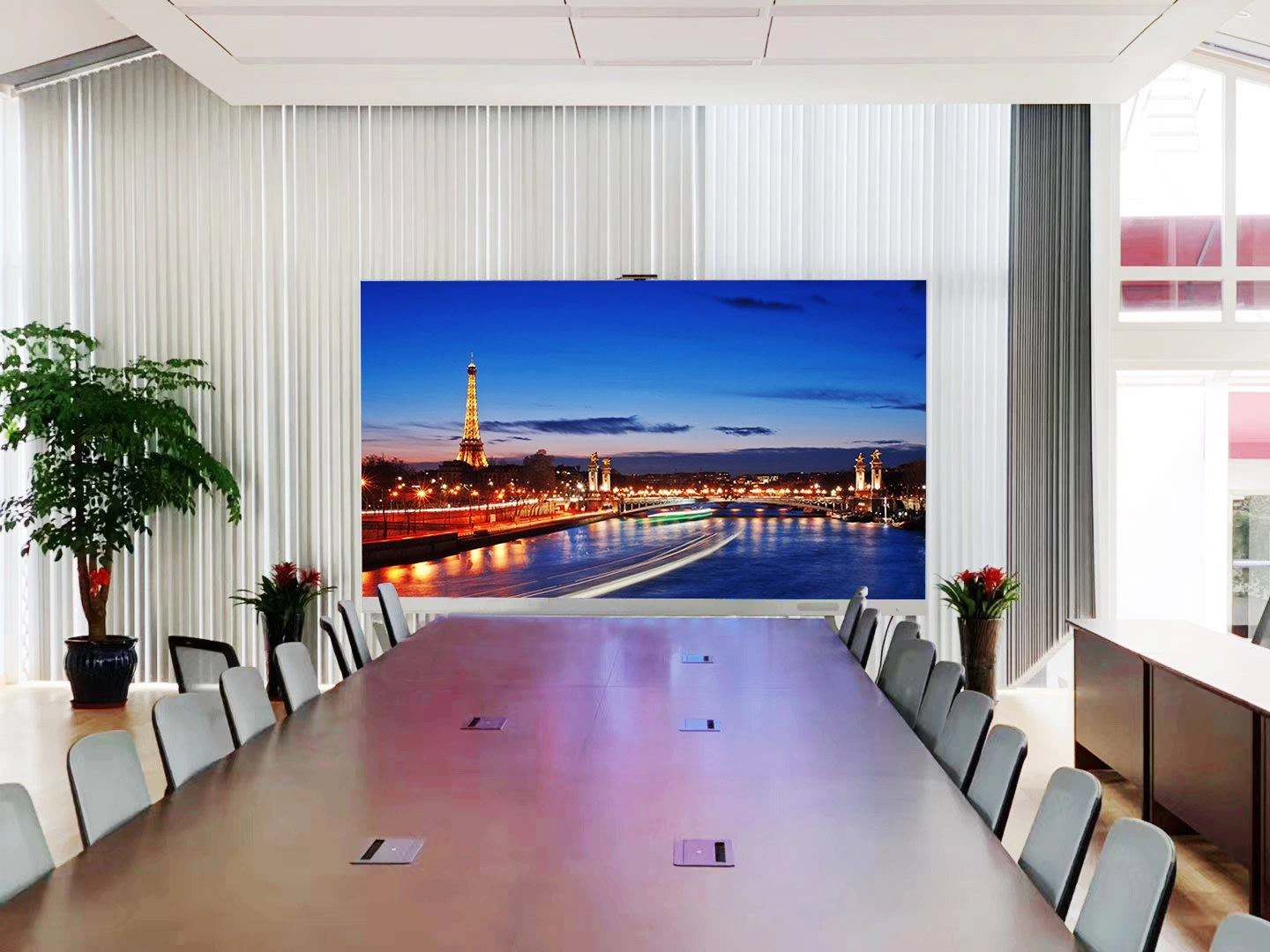
Recommended Pixel Pitch: P0.9 ~ P1.8
Optimal viewing distance: 2-5 meters, requiring a balance between image quality and cost. Content primarily consists of text, graphics, PPTs, and video conferences, necessitating clear display of text lines and true, uniform skin tones. P1.5–P1.8 represents the “golden range” for rear-row viewing in medium-to-large conference rooms. For boardrooms or brands emphasizing corporate image, P0.9–P1.2 enhances technological sophistication and professionalism.
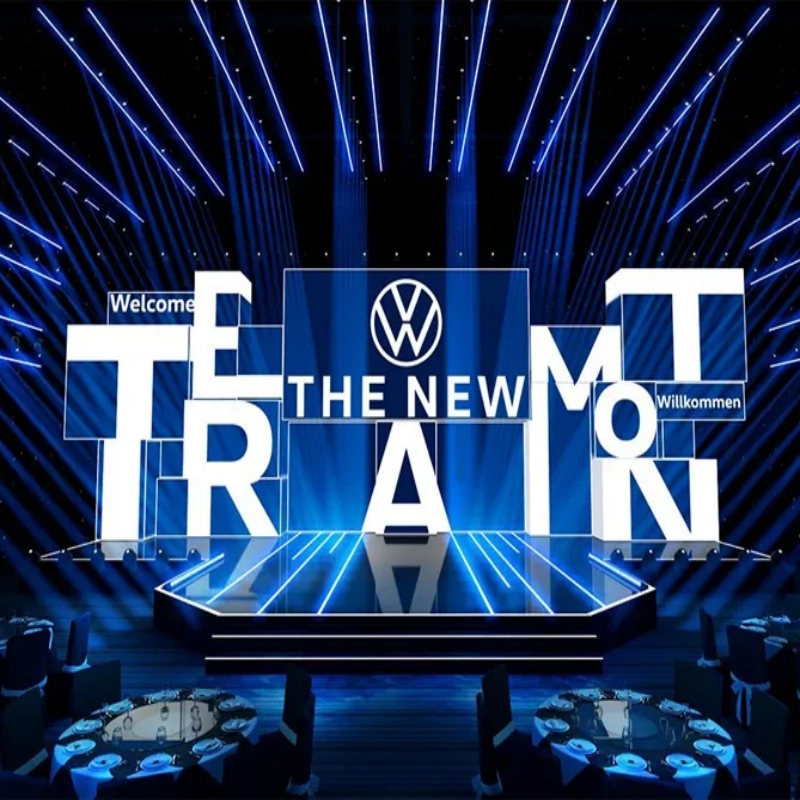
Recommended Pixel Pitch: P1.5 ~ P3.9
Audience seating typically exceeds 5 meters, making pixel differences between P2.5 and P3 imperceptible to the human eye. The core focus is on overall ambiance and macro visual effects. P2.9 represents the ‘sweet spot’ choice, balancing clarity and cost. For stage floor tiles requiring vertical viewing and load-bearing capacity, P3.9 is a proven solution that balances display quality, structural strength, and cost.
Recommended Pixel Pitch: P1.5 ~ P7.8
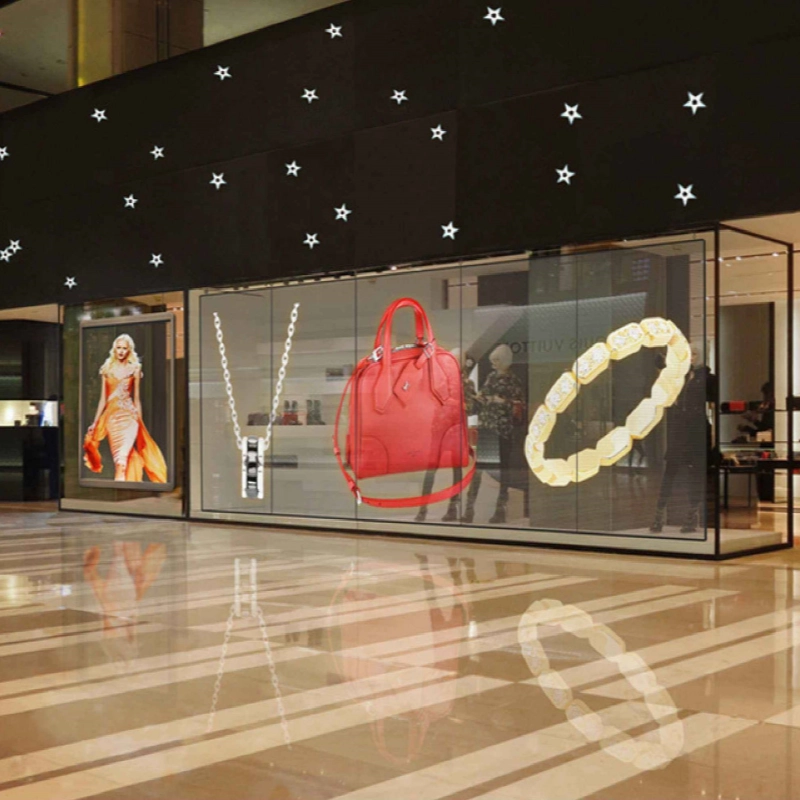
Core objectives include attracting customers and conveying brand messages while integrating with architectural environments. Indoor advertising LED screens and interactive LED displays favor P1.5-P2.5 for refined image quality. Transparent LED displays prioritize P3.9-P7.8 to balance display performance with spatial transparency, making them mainstream choices for shopping malls and glass curtain walls.
Recommended Pixel Pitch: P4 ~ P10+
Viewing distances range from tens to hundreds of meters, making pixel pitch a secondary consideration. Core requirements include high brightness (6000-12000 nits) for sunlight readability, IP65+ protection for all-weather operation, and high reliability to reduce maintenance costs. P6.6 remains the mainstream choice for outdoor advertising media, offering an optimal balance between viewing distance and cost.

Budget and Display Size
Finer pitches mean higher costs due to increased pixel density and materials. Larger displays for distant viewing can use bigger pitches to keep expenses down, while smaller screens in tight spaces need finer ones. Always balance quality with budget—aim for the pitch that meets needs without excess.
The above outlines general solutions. For bidding and design proposals, also consider:
Refresh Rate & Filming Compatibility: Live broadcasts, product launches, XR applications, etc., require ≥7680Hz high refresh rates to eliminate scan lines and water ripple effects.
HDR Effect Implementation: Achieving stunning HDR requires simultaneous high brightness, high contrast, and wide color gamut.
Maintenance design: For high-altitude or embedded installations, front-access maintenance design and the high reliability of micro-pitch COB products represent significant value propositions.
Conclusion
In the end, there is no single “best” pixel pitch—only the one that perfectly fits your project. The right choice is always the result of thoughtfully balancing three decisive factors: how close viewers will be, the complexity and nature of the content, and the budget you have to work with.
Whether it’s a mission-critical command center demanding P0.9–P1.5 (or even P0.6) for zero-compromise clarity at arm’s length, a corporate boardroom where P1.2–P1.8 conveys professionalism, a retail showcase where P1.5–P2.5 creates immersive appeal, or an outdoor LED billboard where P4–P10 delivers reliable impact under direct sunlight—the sweet spot is different for every application.
Start with the simple, proven rule: Minimum viewing distance in meters ≈ pixel pitch in mm. Then layer in the real-world requirements—text legibility, video smoothness, camera compatibility (≥7680 Hz refresh), HDR capability, maintenance accessibility, and environmental durability. When all these elements align, you achieve a display that looks spectacular, performs flawlessly, and stays within budget.
Choosing the correct pixel pitch is not about buying the smallest number available; it’s about selecting the smartest one. When viewing distance, content needs, and budget align perfectly, your LED display will deliver breathtaking clarity where it matters, outstanding value for money, and years of flawless performance. Get this balance right, and your LED screen won’t just show content — it will captivate, inform, and inspire every viewer who sees it.
